


Legal and Political Dynamics in Israel
Interviewer: Good evening, Attorney Ephraim Dimri. Thank you for joining us for this interview with TTJ, a magazine serving the Jewish community in Long Island. Could you begin by providing some context about the community here?
Attorney Dimri: Greetings. Could you elaborate on the size and nature of the Jewish community in Long Island?
Interviewer: Certainly. Our community, located in the Five Towns area, comprises approximately 40,000 individuals. It is a diverse and well-established Jewish community, home to some of the wealthiest Orthodox Jewish families globally, such as the Wolfson, Davis, and Reinov families. Our community wields significant influence in both American and Israeli governance and is among the largest donors to the State of Israel, through individual families and organizations. The neighborhoods here include Lawrence, Woodmere, Hewlett, Far Rockaway, and Inwood. Our community spans ultra-Orthodox to modern Orthodox affiliations, encompassing a wide spectrum of observance.
Attorney Dimri: Understood. What topics would you like to address today? How extensive is the article, and will it include images?
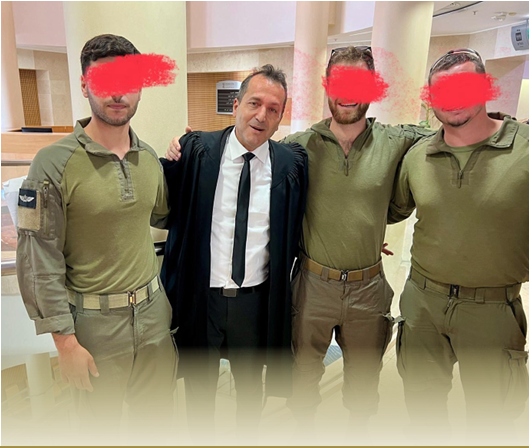
Interviewer: This interview will be the centerpiece of our biweekly magazine, focusing on current issues in Israel, particularly the relationship between Israel and the United States. Our readers often rely on mainstream media like The Wall Street Journal and The New York Times, which may not fully capture the nuances of Israeli affairs. We aim to explore legal and political developments, including the case of Jonathan Ulrich, recent espionage allegations, and other cases you are involved in, either directly or through your legal expertise. High-quality images to accompany the article would be appreciated.
Attorney Dimri: I appreciate the opportunity. Incidentally, I was featured in a New York Times article last year, complete with a photograph.
Interviewer: That’s impressive. Let’s begin with a pressing issue. This morning, Jonathan Ulrich, an advisor or spokesperson for the Prime Minister, was arrested in the so-called “Qatar Gate” case. Judge Menachem Mizrahi, formerly of the State Attorney’s Office, ordered his release, stating he could not discern the basis for the arrest or investigation. Could you shed light on this case, based on your knowledge and legal perspective?
Attorney Dimri: I have provided counsel to some individuals involved in what is termed “Qatar Gate,” though I refer to it as “Qatar Fake.” The allegations lack any criminal substance. The case appears designed to divert public discourse from the unpopularity of the Attorney General and the head of the Shin Bet. By fabricating controversies like Qatar Gate, or investigations into associates of Minister Ben-Gvir or the Talisman affair, authorities aim to shift focus from their own shortcomings. The Qatar matter originated during former Prime Minister Naftali Bennett’s tenure, when Israel had strategic interests in maintaining relations with Qatar. There is no evidence of criminal activity.
Interviewer: You mentioned the Shin Bet’s failures. Could you elaborate?
Attorney Dimri: The Shin Bet’s failure on October 7th was catastrophic, unprecedented in its magnitude. It failed to prevent a massacre, a tragedy akin to a modern-day Holocaust against our people. In another case I’m handling, the Feldstein affair, a Major Yehuda was detained for ten days without access to counsel for sharing a report with political echelons, including the Prime Minister’s military secretary. This report detailed intelligence lapses, revealing that both the Shin Bet and IDF intelligence units had precise, factual indications of an impending large-scale attack—termed “Amaliya Kabira” (a major operation) in Arabic. They dismissed these warnings, not out of ignorance, but through negligence or hubris. The Shin Bet, with its billions in funding and world-class cyber and intelligence capabilities, detected thousands of people gathering at mosques and hundreds of Israeli SIM cards activated in Gaza that night but chose to downplay these signs. Whether this was due to arrogance, deliberate intent, or betrayal remains for a future inquiry to determine, but the data suggests negligence at best, or worse.
Interviewer: Are you suggesting a high-level directive to allow the October 7th attack to occur?
Attorney Dimri: The evidence points to orders from senior levels. A Golani battalion commander explicitly stated he was instructed not to approach the Gaza fence despite visible Hamas operatives. This suggests an intent to undermine the current government or military leadership, though the precise motives—whether hatred for Prime Minister Netanyahu or opposition to the right-wing government—require further investigation. The pattern is evident in other politically motivated investigations, like those targeting Ben-Gvir’s associates or Qatar Gate.
Interviewer: Regarding the Feldstein, Rozenfeld, and Yehuda cases, media reports suggest Arie Rozenfeld uncovered information about who may have enabled the October 7th attack, passing it to Feldstein to reach the Prime Minister. Can you clarify the nature of this information?
Attorney Dimri: I can speak about my client, Rafael Yehuda, a reserve officer mobilized on October 7th. His task was to prepare a report titled “Hefekha Mistavra” (Aramaic for “contrary to reason”). This report exposed extensive factual data demonstrating that both the Shin Bet and IDF intelligence had prior knowledge of an imminent large-scale attack against Israeli communities near Gaza. Yehuda’s findings detailed specific intelligence indicators, which were ignored. When he attempted to share this with political authorities, both the Shin Bet and IDF intelligence intervened to suppress the report, fearing its implications.
Interviewer: Moving to the Sde Teiman case, a terrorist arrived at a hospital, and you’ve described the investigation as flawed, with the Attorney General instructing the Military Advocate General to investigate herself. Can you explain the logic behind this?
Attorney Dimri: Those who fear investigations know why. In Sde Teiman, a leaked video falsely portrayed IDF soldiers as committing heinous acts. I maintained from the outset that the video was fabricated, a claim later substantiated. The video, accessed only by the investigative body (Military Police Criminal Investigation Division), was leaked during the probe, constituting obstruction of justice. Only five or six individuals— including the Military Advocate General and her team—had access. Identifying the leaker would be straightforward by examining their communications, yet no such investigation occurred. I petitioned the Attorney General on behalf of the soldiers I represent pro bono, requesting an inquiry into the leak. She responded by instructing the Military Advocate General—herself a primary suspect—to investigate. This is absurd; the Military Advocate General, who appointed and promotes her deputy, cannot objectively investigate herself. The High Court of Justice (Bagatz) upheld this, shielding both the Attorney General and the Military Advocate General.
Interviewer: Who oversees the Military Advocate General?
Attorney Dimri: Legally, the Military Advocate General reports to the Attorney General, not the Defense Minister or Chief of Staff, creating a chain of self-protection.
Interviewer: This suggests a systemic issue. Could it be that Israel is not a fully democratic state?
Attorney Dimri: Regrettably, Israel’s democracy is superficial. Citizens vote for right-wing governments, yet judicial and legal authorities—aligned with left-wing ideologies—dominate. The High Court routinely overturns laws passed by the democratically elected Knesset, undermining the public’s will. Judges, selected by a committee of judges, perpetuate this cycle, unlike in the United States, where judges are appointed through democratic processes. Even if legislation were proposed to elect judges, the High Court would likely nullify it.
Interviewer: We’ve witnessed protests in Israel, often blocking roads, which you’ve suggested receive judicial leniency. How does this compare to your experience protesting the 2005 Gaza disengagement?
Attorney Dimri: As a young man protesting the disengagement—an event now recognized as disastrous—police used force to disperse us. Today, protesters, particularly those aligned with left-wing causes, enjoy High Court and Attorney General support, even when disrupting public order. In the U.S., such actions face stricter enforcement due to strong leadership. Israel requires similar resolve, but the High Court’s interference stifles it.
Interviewer: Why is there such intense opposition to Prime Minister Netanyahu?
Attorney Dimri: It’s sheer hatred. Netanyahu, one of Israel’s most successful leaders, has been democratically elected repeatedly, surpassing even David Ben-Gurion. His public support is immense, both in Israel and abroad. Opponents, unable to match his stature, resort to obstruction. A senior Yesh Atid official recently admitted their sole ideology is “not Bibi.” This blind opposition drives their actions.
Interviewer: Returning to Sde Teiman, what actually happened?
Attorney Dimri: The Sde Teiman affair was a deliberate attempt to vilify IDF soldiers. Allegations of heinous acts were based on a fabricated video, viewed over 90 million times, aimed at shaming Israel globally. On Tisha B’Av, while fasting, I attended a hearing for the soldiers I represent. Amid protests supporting the soldiers, a senior military prosecutor informed me that the White House and President Biden had personally intervened to prevent the soldiers’ release to house arrest. Through advocacy and prayers, the soldiers were released that day, proving the power of public support over external pressures. The terrorist hospitalized sustained injuries from concealing an object, as confirmed by medical records, not from soldier misconduct.
Interviewer: Recent reports suggest Israel may consider the death penalty for Nukhba terrorists, as with Eichmann. Is this feasible?
Attorney Dimri: I hope so, though I fear the High Court would block it. Discussions exist, but implementation remains uncertain.
Interviewer: Finally, on the espionage case involving a figure under a gag order, what can you share?
Attorney Dimri: Due to the gag order, I cannot disclose the individual’s identity. This person infiltrated a Southern Command bunker for eight days, undetected, and relayed information to senior politicians and former security officials. This leak delayed a ground operation in Gaza by two weeks, allowing Hamas to relocate captives, costing Israel a chance to rescue them. The allegations involve severe espionage, though I cannot elaborate further. When the politicians’ identities are revealed, it will expose significant deceit within Israel’s left, potentially reshaping political alignments.
Interviewer: Thank you, Attorney Dimri, for your insights.
Attorney Dimri: My pleasure. Please include my contact details for your readers seeking legal assistance in Israel.






Related Articles

Interviews With MK Tali Gotliv – Likud
Greetings, and thank you for joining us. You were elected to the...

Leave a comment